AI for UK manufacturing
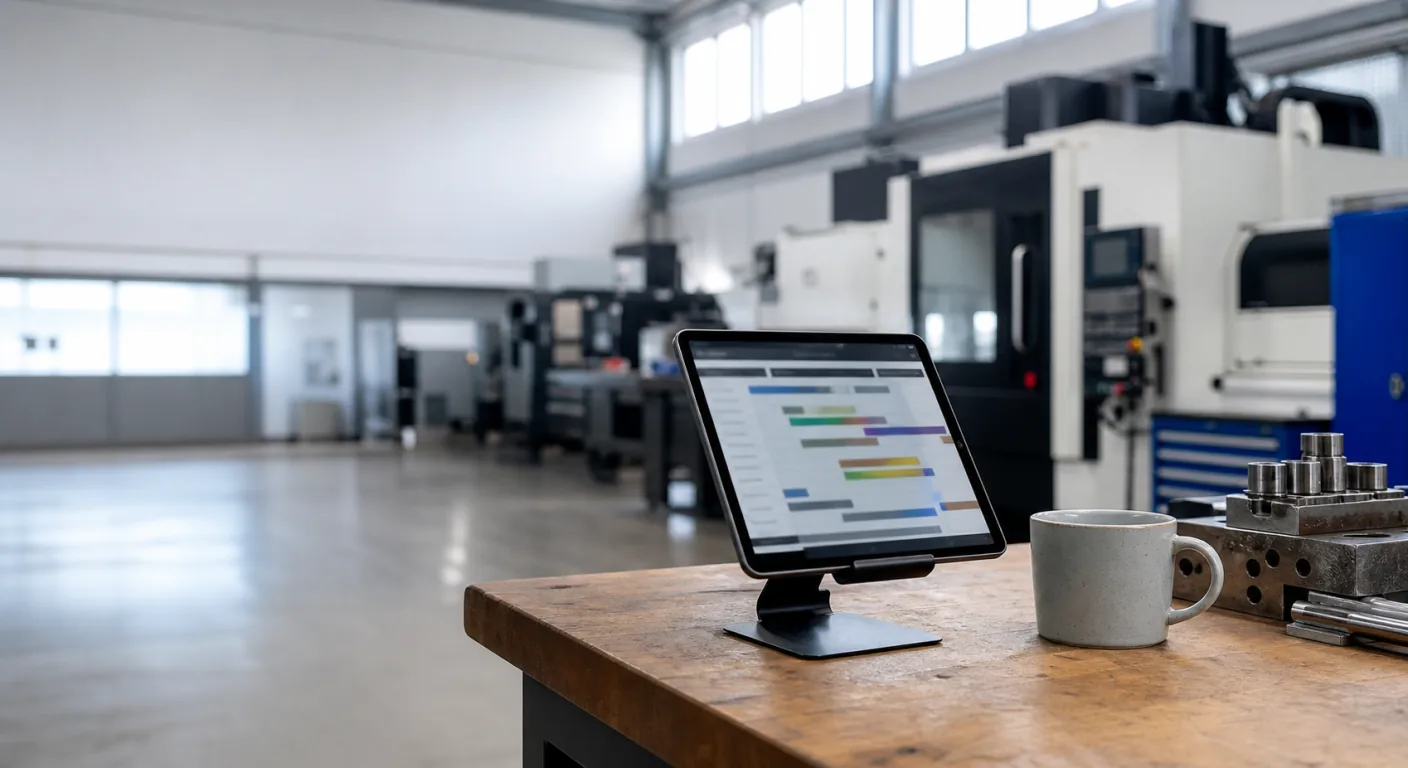
AI in UK manufacturing is the application of machine learning and related techniques to operational problems on the shop floor and across the supply chain. In practice that means predictive maintenance, quality inspection, production scheduling, and supply chain visibility, where AI is embedded inside an operational tool rather than run as a standalone research project. The AI Consultancy works with UK mid-market manufacturers, helping them deploy focused, project-based AI that returns value quickly and builds the data and operational habits that make the next project easier. We are direct about scale: this is accessible, productised digital adoption for mid-market plants, not heavy-industry prime contracting, and a single well-scoped use case almost always beats a plant-wide programme as a first step.
Where AI pays back in manufacturing
Four use cases account for most of the measurable return in a mid-market UK manufacturer. Each works best as a contained project with a clear measure of success rather than as part of a broad transformation.
- Predictive maintenance. Machine learning on sensor and downtime data flags equipment trending towards failure so maintenance can be scheduled before an unplanned stoppage. Worth it on expensive, instrumented assets with enough failure history, not on cheap or rarely failing equipment.
- Quality inspection. Computer vision detects surface defects, dimensional deviations, and assembly errors on the line faster and more consistently than periodic manual checks, reducing scrap and rework.
- Production scheduling. AI evaluates far more sequencing options against constraints such as changeover time, machine availability, and due dates than a planner can hold in their head, and re-plans quickly when a constraint changes. It is decision support; the planner retains judgement.
- Supply chain visibility. Forecasting and anomaly detection anticipate shortages and delays, protecting both output and working capital. As with all forecasting, it depends on clean historical data.
The data foundation comes first
The single biggest determinant of whether a manufacturing AI project succeeds is the data underneath it. AI cannot forecast, detect anomalies, or predict failures without reliable historical and live data, so connected shop-floor data capture is usually the prerequisite: industrial IoT sensors, machine connectivity, and an ERP or manufacturing execution system that records what actually happened. Where clean data already exists, deployment is fast. Where it does not, the first phase is establishing that foundation, because a model trained on incomplete or inconsistent data produces worse decisions than the experienced planner it was meant to support.
We assess data readiness before recommending any tool. Our guide to AI data preparation sets out the groundwork, and our guide to integrating AI with legacy systems covers the common case where the shop floor runs on older equipment and software.
Safety, quality, and standards
AI does not change a manufacturer's underlying obligations, so a deployment has to fit within them rather than around them.
- HSE duties. Any AI that influences a process with safety implications must be assessed so it supports safe operation, with humans accountable for safety-critical decisions.
- ISO 9001. Where the manufacturer holds it, an AI quality-inspection system becomes part of the documented quality process and must be controlled, validated, and recorded.
- ISO 27001. Where it applies, the data flowing into and out of any AI tool falls within the information security management system.
We design deployments to extend the existing quality and safety frameworks, which is what auditors and certification bodies expect. Adoption is the other half of the equation: the most common reason a technically sound project under-delivers is weak adoption, where the tool is installed but the workflow never changes. Our guide to AI change management and employee adoption covers the patterns that drive uptake on the floor.
Relevant services
- AI Readiness Assessment : establish what data exists, what condition it is in, and which use cases are realistic before committing to a tool.
- AI Implementation : end-to-end delivery of a scoped use case, from data foundation through to a measured, live deployment.
- Workflow Automation : automating the administrative and data workflows that sit around production and the supply chain.
- AI for SMEs : pragmatic AI adoption scoped to the budget and team of a mid-market manufacturer.
- AI Strategy Consulting : a sequenced roadmap that turns one successful project into a defensible plan for the next.
For an adjacent sector with shared logistics and supply chain patterns, see the logistics and transport industry page and the industry section of the Knowledge Hub.
Frequently asked questions
What can AI realistically do in a UK manufacturing SME?+
What does AI need in place before it works on the shop floor?+
How does predictive maintenance work, and when is it worth it?+
Can AI handle quality inspection?+
How does AI sit with HSE duties and ISO standards?+
Does AI replace the production planner or scheduler?+
We are a mid-market manufacturer, not a large plant. Does this apply?+
How do you start without committing to a big programme?+
Ready to explore AI for your manufacturing operation?
Book a free 30-minute consultation. We will assess your data readiness and identify the single use case most likely to return value quickly.